
What Makes a Natural-Looking Injectable Result?
We have all heard the word "botched," and it is also a term everyone in aesthetics strives to stay far away from. The kind of results that make people hesitant about injectables, where someone looks heavy, overdone, or unrecognizable, are what the conversation tends to center around even though they represent a fraction of outcomes.
The hesitation is understandable, but those results are avoidable. What makes a natural-looking injectable result comes down to planning, anatomy knowledge, and restraint. Using less product is part of it, but a small amount of poorly placed filler can look just as off as too much placed thoughtfully. The difference is in the approach.
AtURBAN Medical, the philosophy focuses on subtle enhancement and individualized treatment plans, with the goal of looking like a rested, balanced version of yourself.
What Does a Natural-Looking Injectable Result Actually Mean?
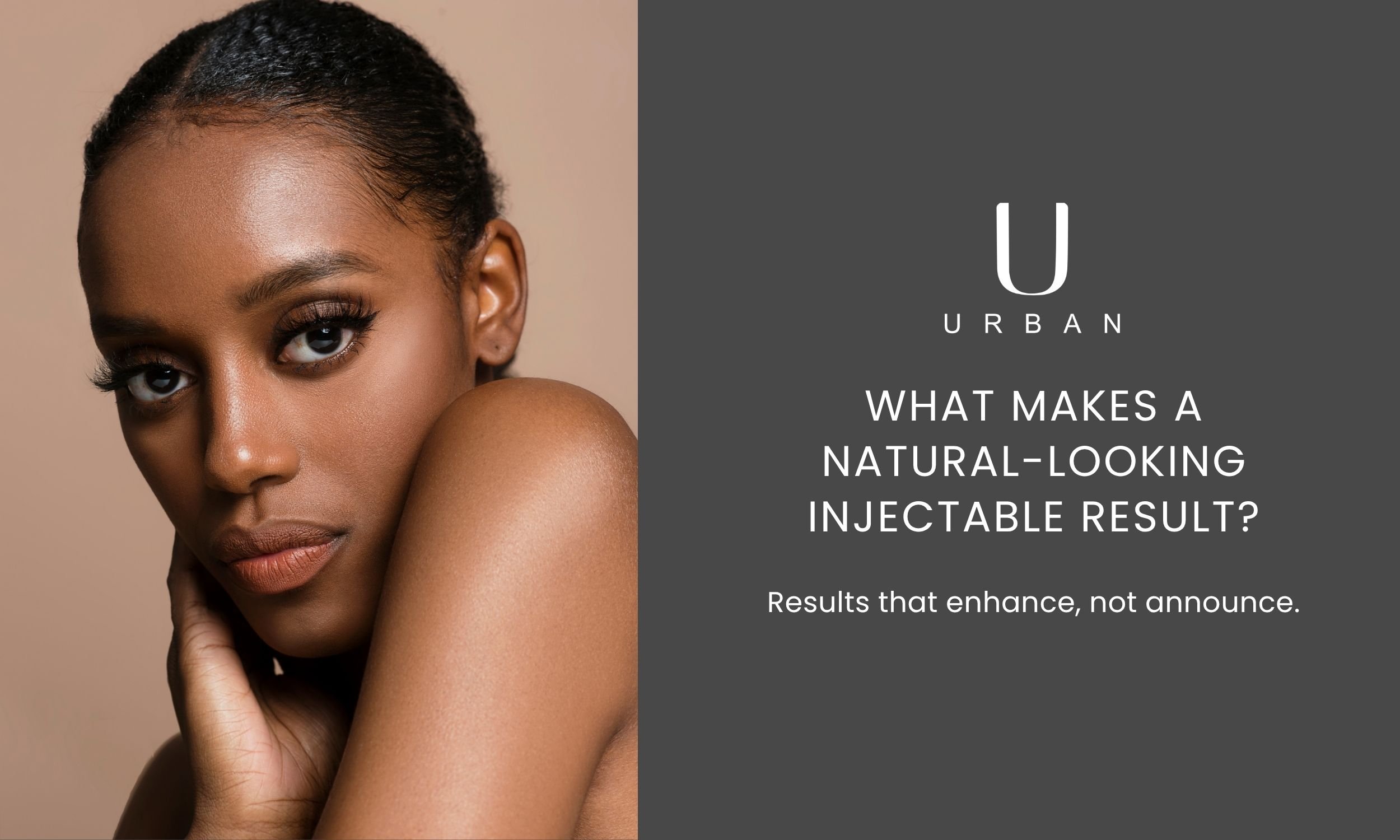
A natural-looking injectable result means the face looks refreshed, balanced, and proportionate, with expression and movement preserved. The improvement reads as a general quality of looking well rather than a visible treatment.
In practical terms, that looks like:
Softer forehead lines that still shift naturally
Restored cheek support that lifts the midface without visible puffiness
Improved facial symmetry that feels harmonious
Healthier-looking skin with better texture and hue
The people who walk away most satisfied tend to be the ones whose friends noticed they looked good but could not identify exactly why, and that is the benchmark a well-executed treatment aims for.
Does More Product Automatically Create Better Results?
No. More product does not create better results.
Adding volume beyond what the anatomy calls for starts to distort proportions, and the face begins to look heavy or static as expressions lose the natural shadow and movement that give them character.
Volume stacking is one of the most common drivers of this. That is when filler gets layered on top of existing product without properly assessing what is already there, and over time the face gradually becomes rounder or puffier from certain angles. What started as subtle enhancement accumulates into something that reads as treated rather than refreshed.
Starting with less and building gradually over multiple sessions gives both the provider and the patient a chance to assess each stage before proceeding, which is the kind of measured approach that keeps results looking proportionate over time.
Why Does Facial Anatomy Matter So Much With Injectables?
Facial anatomy matters because every face ages differently, functions differently, and holds product differently, and a treatment plan that ignores those individual variables tends to produce generic results. Bone structure, skin thickness, fat distribution, and habitual movement patterns all influence where product should go, how much is appropriate, and which type of filler or toxin will behave correctly in that tissue.
Treating one area without considering how it relates to the rest of the face is one of the most reliable ways to create an unnatural result. For example:
Larger cheeks on a face with flat temples can make the midface look disproportionate rather than lifted
Adding lip volume without addressing the surrounding structure can make the mouth look disconnected from the face
Relaxing the forehead without accounting for brow position can cause weight that reads as tired rather than refreshed
How Can Botox, Dysport, or Xeomin Still Look Natural?
Natural-looking neurotoxin results come from softening muscle movement rather than stopping it entirely. The goal withBotox,Dysport, or Xeomin for the forehead and upper face is to reduce the intensity of repetitive contractions without flattening the brow and eliminating the ability to express naturally.
Tactical placement matters as much as dose, and a few principles guide what that looks like:
Treating the central forehead while preserving movement at the brow tails keeps the brow out of dropping or looking heavy
Leaving some activity in the glabella, the area between the brows, prevents the over-smoothed look people associate with frozen results
Adjusting doses based on individual muscle strength means the result fits the person rather than following a standard template
Two people receiving treatment for the same forehead concern will often receive different injection maps because their anatomy calls for different approaches.
What Makes Filler Look Natural Instead of Overdone?
Natural-looking filler comes from placement strategy and product selection working together, with volume playing a supporting role. The same amount of filler placed in the wrong layer or the wrong area will look overdone, while a modest amount placed thoughtfully can reshape proportion significantly. Three factors consistently separate natural outcomes from overdone ones.
Why Does Placement Matter More Than Volume?
Filler placed in deep structural zones, along the bone or in the fat compartments beneath the muscle, creates lift and support that reads as natural because it works with the face's existing architecture. Filler placed too close to the skin surface tends to create a puffy, pillow-like appearance that doesn't shift naturally with expression, which is often what people picture when they worry about looking overdone.
Why Are Different Fillers Used in Different Areas?
Filler products vary in thickness, firmness, and how they integrate with tissue, and using the wrong product in a given area is a common source of unnatural results. Softer, more pliable fillers suit mobile areas like thelips, where the product needs to flex with movement, while firmer, denser fillers belong in structural zones like the cheeks or chin, where projection and support are the goal.
URBAN Medical carries a full portfolio of filler brands, each suited to different treatment goals and anatomical zones:
Restylane is a hyaluronic acid-based filler that fills wrinkles, restores volume to hollow areas, and enhances contours including cheekbones, temples, and lips.
Revanesse adds projection to facial contours, hydrates the skin, and restores plumpness for a smoother, more vibrant complexion.
Radiesse uses calcium hydroxylapatite microspheres to enhance contours and stimulate the body's own collagen production for long-lasting rejuvenation.
RHA (Resilient Hyaluronic Acid) is specifically formulated to move with dynamic facial expressions, making it well-suited for areas with significant movement.
Sculptra Face stimulates collagen production gradually over time, creating a refreshed appearance that can last up to two years.
Sculptra BBL brings the same collagen-stimulating approach to body contouring, enhancing curves and sculpting the silhouette naturally.
Liquid Rhinoplasty uses strategic filler injections to reshape and refine nasal contours without surgery, suited for dorsal humps, minor asymmetries, or those wanting immediate results with minimal downtime.
Knowing which of these to reach for, in which zone, and in what combination is exactly the kind of clinical judgment that separates a natural outcome from an overdone one.
Why Does Facial Balance Matter More Than One Feature
Upgrading one feature in isolation without considering how it reads against everything else is how subtle improvements become obvious interventions. Larger lips on a face with flat cheeks and a receded chin draw attention for the wrong reason, and handling proportion across the whole face, even slightly, produces results that feel genuinely harmonious rather than selectively worked.
How Do You Maintain Natural-Looking Results Over Time?
Maintaining natural-looking results requires treating the face as a system that changes rather than a fixed target to maintain identically. Maintenance plans that simply repeat the same treatment at the same interval without reassessment can accumulate volume or over-relax muscles in ways that gradually shift results away from natural.
Consistent, evolving maintenance looks like:
Neurotoxin treatments every three to four months with dose adjustments founded on how the muscles are responding
Filler refresh sessions that assess existing product before adding anything new
Collagen-supporting treatments like microneedling or biostimulators to improve skin quality between sessions
A daily skin care routine with retinoids and SPF to extend the benefit of clinical treatments
The face at 40 needs a different approach than the face at 35, even if the same person is in the chair. Treatment plans that evolve with the patient produce results that look consistently natural across years rather than static and increasingly artificial.
How Do You Know if Your Injectable Goals Are the Right Fit?
Injectable treatments are an excellent fit when goals are grounded in the individual's own face and focused on refinement rather than transformation. Sitting with these questions before booking a consultation helps clarify what you are actually looking for:
Do you want subtle refinement that preserves your natural expression?
Are you open to gradual improvement over multiple sessions rather than one dramatic change?
Are your goals based on how you feel about your own face, rather than a trend or someone else's result?
Does looking rested and balanced feel like a satisfying outcome?
If the answers lean yes, injectables with a provider who prioritizes natural outcomes are likely a good fit.
Ready to Explore Natural-Looking Injectables?
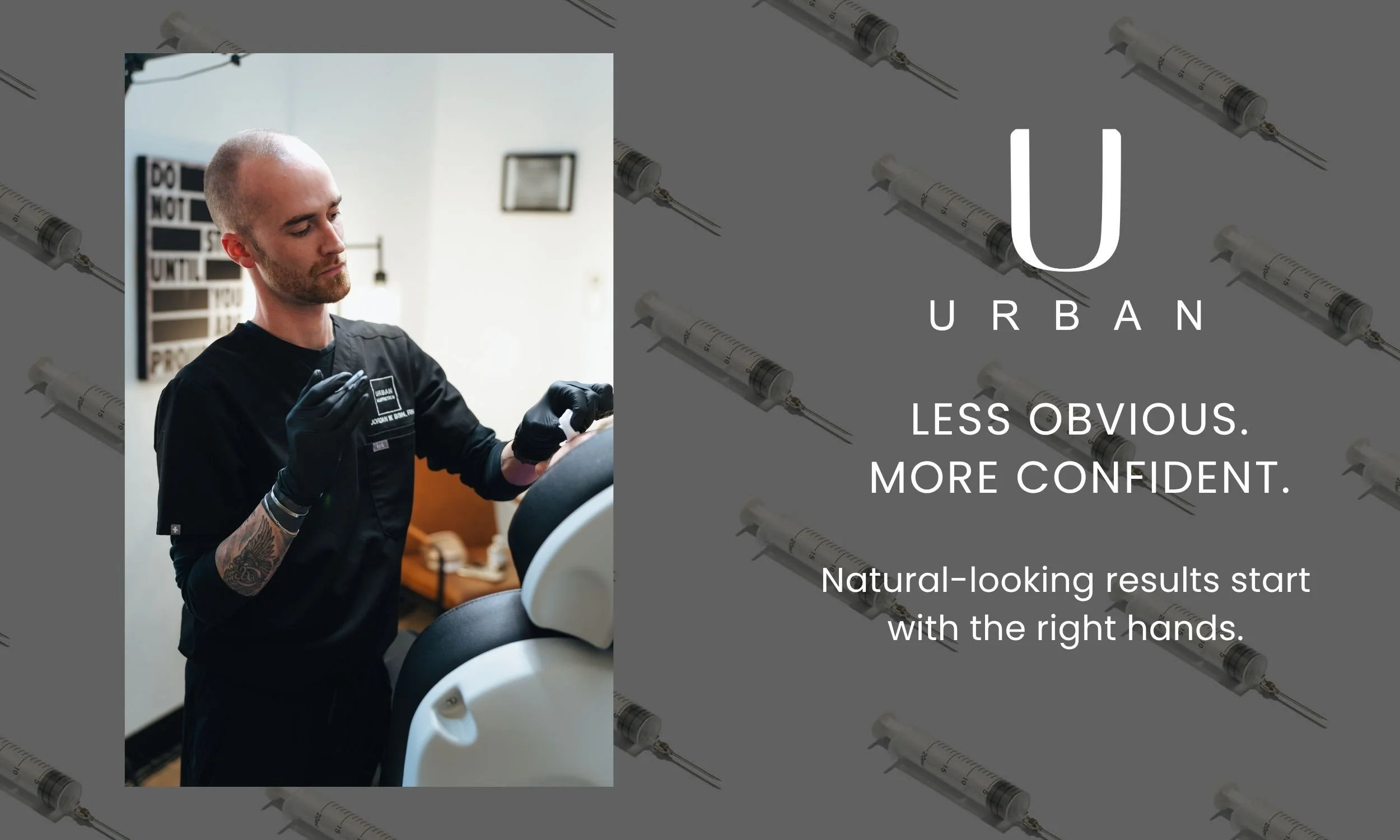
What makes a natural-looking injectable result is the combination of facial balance, anatomy knowledge, product selection, placement technique, and the judgment to stop when the outcome looks like the best version of the patient. Technique matters more than product, and planning matters more than volume.
Schedule a consultation with URBAN Medical to discuss personalized injectable treatments designed around facial harmony, movement, and natural-looking enhancement that still looks like you.