
How PRP and Exosome Therapy Restore Hair Growth
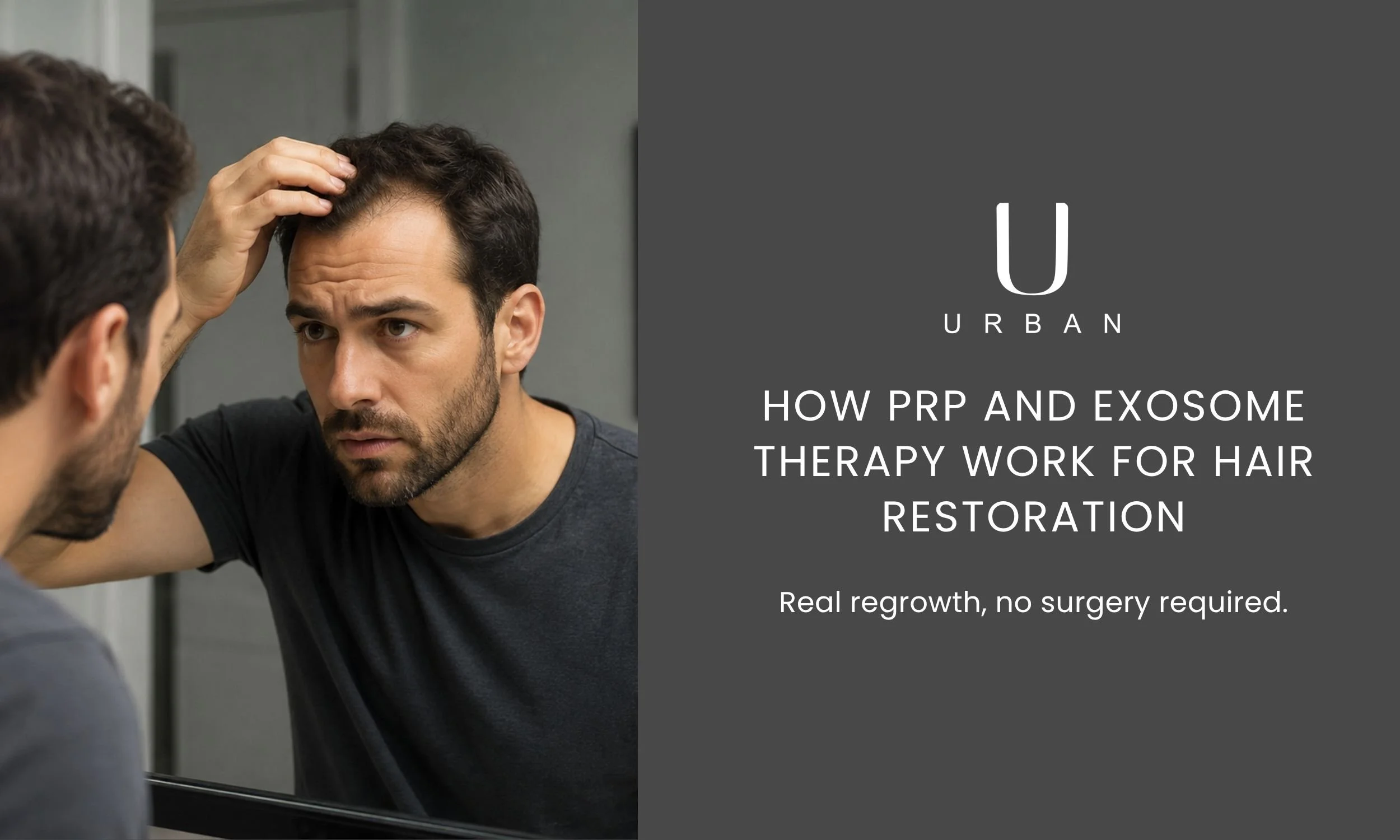
Some things in life are just inevitable, like time, and well... receding hairlines.
But what is also true is that hair thinning does not have to go unaddressed. One day a photo catches the light at the wrong angle, or you notice more scalp showing around your hairline than you remember, and suddenly the gradual change feels very visible.
Most people seeking solutions have already tried topical products with limited success. Modern regenerative treatments take a different approach: instead of masking the thinning, they focus on supporting the scalp environment that hair growth depends on.
PRP and exosome therapy are often discussed separately, but they are commonly used together because they address hair restoration through different, complementary mechanisms. Neither is an overnight fix, and both work with your body's natural processes instead than overriding them.
Let’s talk about how each one works and why pairing them makes sense.
Why Does Hair Start Thinning in the First Place?
Hair thinning develops when the scalp environment deteriorates to the point where growth cycles shorten and fewer hairs reach full thickness. The most common causes include:
Androgenetic alopecia, a genetically driven pattern that affects both men and women and accounts for most cases
Hormonal shifts, including postpartum changes, thyroid fluctuations, and menopause
Chronic stress, which can push large numbers of follicles into a resting phase at the same time
Scalp inflammation, which disturbs the follicle environment and interferes with normal growth cycles
Decreased circulation, limiting the nutrients and oxygen follicles depend on
Aging, which gradually slows follicle activity even without any particular underlying condition
Most of these factors are treatable or modifiable. Regenerative medicine targets the scalp environment itself, which is the foundation of how therapies like PRP and exosomes approach the problem.
What is PRP Hair Restoration?
PRP, short for platelet-rich plasma, is a concentration of growth factors made from your own blood. A small blood draw is processed in a centrifuge, a device that spins at high speed to separate blood into its component layers. The resulting plasma is packed with platelets that carry proteins supporting tissue healing and cell regeneration.
When injected into the scalp, PRP delivers those growth factors directly to the follicle zone:
Circulation in the treated area improves
The local tissue environment becomes progressively supportive for follicle activity
Dormant or weakened follicles receive the regenerative signals they need to resume growth
Because everything comes from your own body, there are no synthetic additives, no foreign substances, and no systemic side effects.
What is Exosome Therapy for Hair Restoration?
Exosomes are tiny signaling particles, often described as the body's cellular messaging system. Released by cells, they carry proteins, growth factors, and molecular instructions that tell neighboring cells how to behave. In a healthy scalp, this kind of cellular communication supports maintaining follicle activity and keep inflammation in check.
Exosome therapy delivers a concentrated dose of those signaling molecules to the scalp, boosting the regenerative instructions the body's own cells would normally send. The goals are straightforward:
Wake up dormant follicles
Reduce scalp inflammation
Extend the active growth phase of the hair cycle
One clarification worth making: exosomes are not stem cells. They are the signals that stem cells produce. The therapy introduces molecular instructions, not living cells, which affects how it works and how it is regulated. That distinction matters for patients evaluating their options.
How Do PRP and Exosome Therapy Work Together?
PRP and exosome therapy target hair restoration at different levels of the same biological process, which is why combining them tends to produce stronger results than either alone.
How Does PRP Help Prepare the Scalp Environment?
PRP improves the scalp environment by boosting circulation, delivering growth factors, and triggering a tissue healing response in the treated area. Think of it as improving the soil before planting. Follicles that were starved of blood supply or nutrients get access to the regenerative signals they need to become active again.
How Do Exosomes Support Cellular Communication?
Exosomes carry targeted molecular instructions directly to cells in the follicle zone, telling them to shift toward regeneration. Beyond the broad growth factor delivery PRP provides, exosomes offer more specific signals: reduce inflammation, activate dormant follicle stem cells, and extend the active phase of the hair follicle growth cycle.
Why Can Combining Them Produce a Synergistic Effect?
When used together, PRP prepares and activates the scalp environment while exosomes amplify the accuracy of cellular signaling within it. This is the basis of how PRP and exosome therapy work together for hair restoration: two treatments supporting follicle health from different angles at the same time. Outcomes vary by individual and are not guaranteed, but the joint approach gives the scalp the most favorable conditions for regeneration.
What Happens During a PRP and Exosome Hair Restoration Appointment?
A combined session is minimally invasive and typically completed in under 90 minutes. It moves through four stages:
Blood Draw and PRP Preparation
Treatment starts with a small blood draw from the arm, taking only a few minutes. The sample is processed in a centrifuge for about 10 to 15 minutes to isolate the platelet-rich plasma. During this wait, the scalp preparation begins.
Preparing the Scalp
The scalp is cleaned and, depending on the protocol, a topical numbing agent is applied for comfort. The provider identifies the treatment zones based on where thinning is most active.
Applying or Injecting the Regenerative Blend
PRP is injected across the thinning zones using fine needles. Exosomes follow, either by injection or applied topically after microneedling, depending on the plan. Both the scalp environment and the cellular signaling layer are addressed in the same session.
Post-Treatment Guidance
Mild scalp tenderness and temporary redness are common for 24 to 48 hours, but most people just return to normal activity the same day. Your provider will give specific instructions around scalp washing and avoiding heat or harsh products in the days following treatment.
How Long Does It Take to See Hair Restoration Results?
Results develop gradually over three to six months, following the natural hair growth cycle. The timeline breaks down roughly like this:
Weeks 1 to 4: Some patients notice increased shedding, a normal sign that the growth cycle is resetting, not a sign the treatment is failing
Month 3: Finer new hairs typically start appearing in areas that were thinning
Month 6: Density improvements and thicker hair shafts become more visible
Most providers recommend a series of initial sessions followed by maintenance appointments spaced several months apart. Sustaining the results requires consistency, since the biological processes involved are ongoing rather than one-and-done.
Who Is a Good Candidate for PRP and Exosome Hair Therapy?
PRP and exosome therapy work best for people with early to moderate thinning where follicles are still present and viable. These treatments support and reactivate existing follicles, so stronger results come when there is still active follicle tissue to work with.
Good applicants generally include:
People experiencing androgenetic alopecia in early to moderate stages
Women dealing with postpartum or hormonally driven thinning
Anyone noticing reduced density or a widening part before significant follicle loss has occurred
Patients wanting preventative support to slow progressive thinning
Earlier intervention tends to produce better outcomes simply because more viable follicles are available to respond. A medical evaluation before starting treatment sets accurate expectations and confirms whether regenerative therapy fits a given case.
Can PRP and Exosome Therapy Replace Hair Transplant Surgery?
PRP and exosome therapy restore activity in existing follicles, while transplant surgery physically relocates donor follicles to areas of significant loss. They address different problems, and for many patients the non-surgical path is the right one, especially when thinning is caught early.
Patients who tend to be well-suited to regenerative treatment:
Those who prefer to avoid surgery
People with diffuse thinning across large areas rather than concentrated loss
Patients who want to maintain and fortify existing hair alongside or after a transplant
For patients with advanced follicle loss where very few active follicles remain, transplant surgery may be needed to restore meaningful density. A consultation atURBAN Medical helps determine which approach fits a patient's specific pattern and goals.
What Should You Know Before Choosing Regenerative Hair Restoration?
Regenerative hair restoration works through biological processes that take time, and going in with that timeline in mind leads to a much more satisfying experience.
Going into treatment, it helps to know:
Multiple sessions are typically needed, and maintenance treatments help sustain results over time
Outcomes vary based on the underlying cause of thinning, individual biology, and how far follicle loss has progressed
A medical evaluation should happen before treatment to rule out underlying disorders such as thyroid dysfunction or nutritional deficiencies that may be causing loss
Injection technique, product quality, and treatment planning all affect outcomes, so provider expertise is highly important
Ready to Explore Regenerative Hair Restoration?
PRP and exosome therapy work together for hair restoration by supporting the scalp environment and cellular communication at the same time. PRP builds a stronger biological foundation, exosomes deliver targeted regenerative signals, and combining them gives the scalp the conditions it needs for new growth over time.
Results develop gradually, but the right candidate, treated at the right stage of thinning, can see notable advances in density, thickness, and scalp coverage via regenerative care.
Schedule a consultation with URBAN Medical to discuss your hair thinning concerns, explore PRP and exosome therapy options, and build a personalized restoration plan around your goals.