
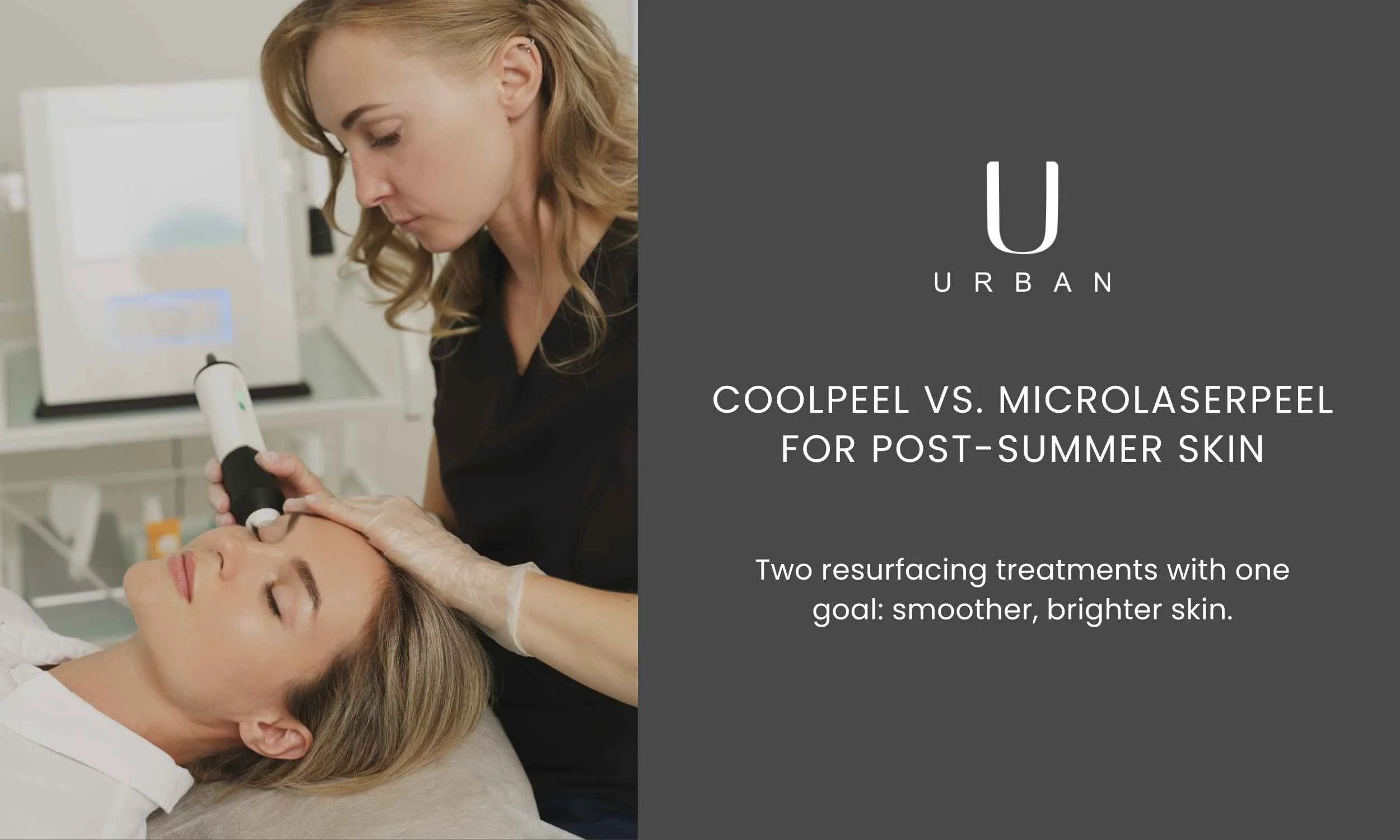
After months of stronger sun and more time outdoors, you may notice that brown spots, uneven tone, or rough patches stand out more than they did in spring. You may be considering laser skin resurfacing for the first time, or comparing options after noticing new changes in your skin this summer.
CoolPeel and MicroLaserPeel both resurface the skin, but they work in different ways. CoolPeel is a fractional CO₂ treatment that targets tiny sections of skin while leaving the surrounding tissue intact. MicroLaserPeel uses an erbium, or Er, laser to remove a thin, controlled layer across the treated surface.
Neither treatment is automatically the better choice. The right option depends on what you want to improve, how much resurfacing your skin needs, and how much recovery time you can realistically plan for. Fall can be a practical time to reassess your skin as sun exposure starts to ease.
Below, we break down how the two treatments differ and when one may make more sense than the other after summer.
What Is the Difference Between CoolPeel and MicroLaserPeel?
CoolPeel treats the skin in a fractional pattern, while MicroLaserPeel resurfaces the full treated area at a shallow, controlled depth. Both are ablative treatments, which means they remove a small amount of skin so new skin can form as the area heals. We can adjust the settings for either treatment, so recovery and results will not look exactly the same for every patient.
The main difference is how each treatment resurfaces the skin:
CoolPeel's Fractional CO₂ Approach
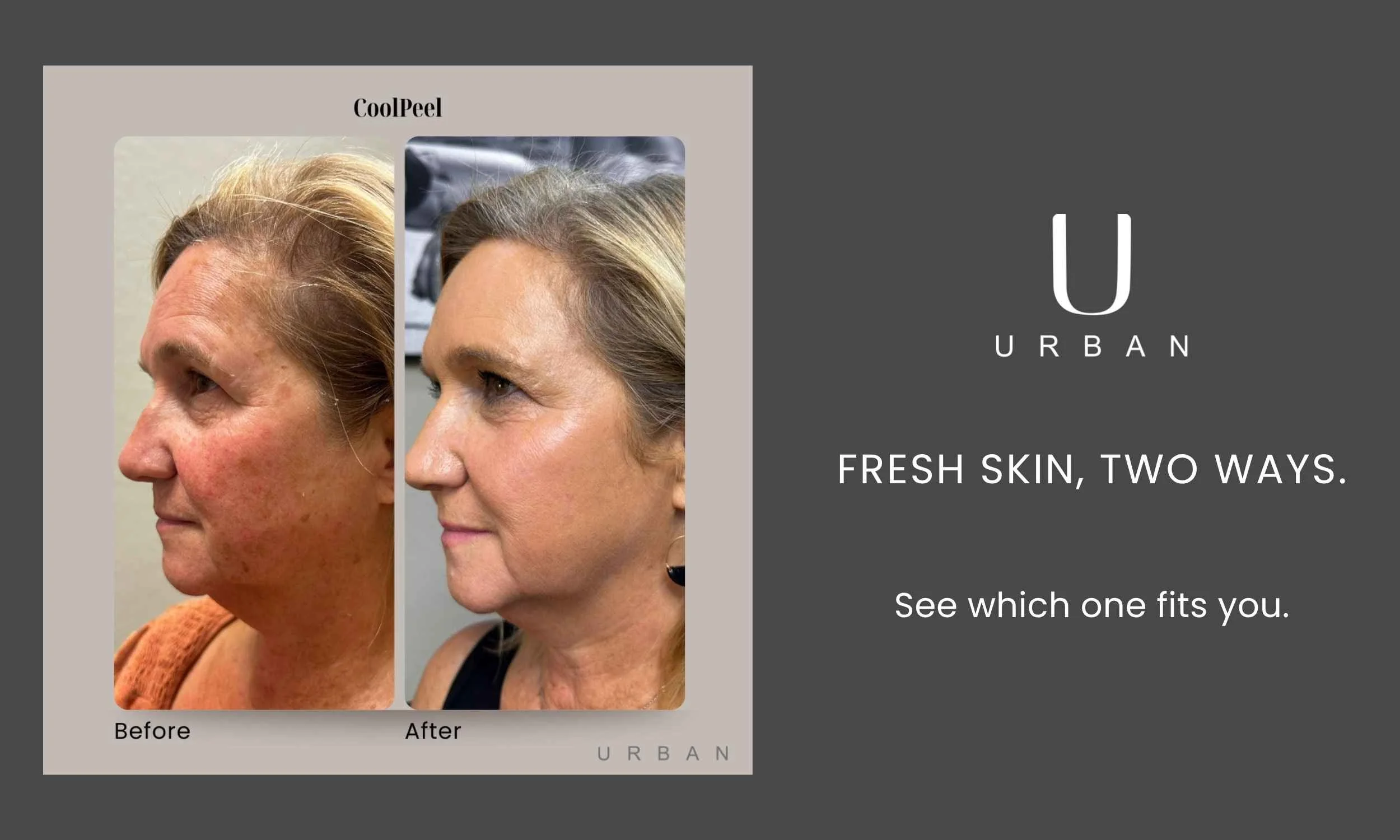
CoolPeel delivers CO₂ laser energy in a grid of microscopic treatment zones. The untreated skin between those zones supports healing, which helps keep recovery lighter than traditional CO₂ resurfacing. It may help soften fine lines and improve texture along with visible sun-related changes.
MicroLaserPeel's Erbium Resurfacing Approach
MicroLaserPeel uses an Er laser, a type of erbium laser, to remove a thin layer across the entire treated surface. We can adjust the treatment depth based on concerns such as rough texture, enlarged pores, sun damage, and pigment irregularities.
Which Post-Summer Skin Concerns Can Each Treatment Address?
The two treatments overlap in what they can address, but one may make more sense depending on the concern you notice most. After summer, common changes may include:
Brown spots and uneven tone
Rough texture
Fine lines
Enlarged-looking pores
Dull-looking skin
Laser resurfacing is an established option for sun-damaged skin. We also look at how deep the changes go, since superficial pigment and deeper texture or collagen changes may call for different approaches.
Here is where their strengths begin to differ:
Texture, Fine Lines, and Pores
CoolPeel may be worth considering if rough texture, early fine lines, or enlarged-looking pores are your main concerns. Its fractional approach encourages new collagen while keeping disruption to your routine relatively limited.
Uneven Tone and Superficial Pigmentation
MicroLaserPeel may suit you if surface roughness and visible pigment irregularities are more noticeable. Because it resurfaces the upper layer evenly, it may help improve tone and superficial discoloration.
Some brown spots need to be evaluated before treatment or may respond better to another option, so we assess any concerning or unusual pigment before using a laser.
Mixed Sun Damage
Many people have both uneven pigment and texture changes after summer. In that case, we may recommend one of these treatments at a specific depth or suggest another option from our resurfacing menu.
From there, the choice often comes down to what you want to improve and how much recovery time you can accommodate.
When Might CoolPeel Be the Better Fit After Summer?
CoolPeel may make more sense if you want resurfacing with less visible downtime and your main concerns include:
Rough or dull-looking texture
Fine lines
Enlarged-looking pores
Mild sun-related changes
Gradual collagen-focused rejuvenation
Less interruption to your routine
Its appeal usually comes down to two things:
Fractional Resurfacing With Less Interruption
Because each session treats only a fraction of the skin, recovery is often lighter than with more extensive resurfacing. Many people can return to their normal routines within a few days.
Because the treatment is gentler, some patients may need a series of sessions to reach their desired level of improvement.
Texture and Collagen Goals
Collagen rebuilds gradually, so smoother texture and firmer-looking skin tend to develop over the weeks after treatment. Your skin may look refreshed once the initial healing settles, with additional changes appearing over time.
If uneven tone or superficial pigmentation is the bigger concern, MicroLaserPeel may be the more appropriate option.
When Might MicroLaserPeel Be the Better Fit After Summer?
MicroLaserPeel may be a better option if uneven tone, superficial pigmentation, or rough surface texture are your main concerns and you can accommodate more visible peeling.
It may be considered for:
Uneven tone
Superficial pigment irregularities
Rough or flaky texture
Enlarged pores
Fine lines
Dullness
One session may not clear every sunspot, and some brown marks need to be evaluated before any laser treatment.
That flexibility comes from two main features:
Controlled Surface Renewal
MicroLaserPeel removes a thin, even layer of skin so damaged surface cells can shed as new skin heals underneath. As the skin recovers, tone may look more even and the surface may feel smoother.
Customizable Treatment Depth
A lighter MicroLaserPeel may involve a shorter period of redness, while a deeper treatment can bring more peeling and a longer recovery. We adjust the depth based on what you want to improve and how much visible healing you are comfortable with.
How Do CoolPeel and MicroLaserPeel Compare?
CoolPeel is a fractional CO₂ treatment with generally lighter recovery, while MicroLaserPeel is an erbium treatment whose recovery varies more with depth. Here is a quick CoolPeel vs MicroLaserPeel comparison:
| Factor | CoolPeel | MicroLaserPeel |
|---|---|---|
| Laser type | CO₂ | Er (erbium) |
| Resurfacing style | Fractional | Full-field, superficial |
| Common goals | Texture, fine lines, pores, sun-related changes | Texture, uneven tone, superficial pigment, fine lines |
| Treatment depth | Fractional and adjustable | Adjustable superficial depth |
| Typical recovery | Generally shorter and lighter | Varies with depth and may involve more visible peeling |
| Best suited based on | Skin concerns, skin type, recovery preferences | Skin concerns, skin type, treatment depth, recovery preferences |
Downtime is often one of the biggest practical differences between the two treatments.
How Does Downtime Differ Between CoolPeel and MicroLaserPeel?
CoolPeel usually involves lighter downtime, while MicroLaserPeel downtime varies more with treatment depth and often runs about 1 to 7 days. Downtime refers to the period when your skin still looks noticeably treated, which may be shorter than the time it takes for the skin to fully heal.
Recovery can vary based on:
Treatment depth and settings
The area treated
How your skin responds
The recovery experience also differs between treatments:
After CoolPeel
You may notice some of the following for several days:
Redness or pinkness
Warmth and dryness
A rough, sandpaper-like feel
Temporary sensitivity
How quickly you feel back to normal varies, and lighter settings generally mean a shorter recovery.
After MicroLaserPeel
Depending on the treatment depth, you may experience:
Redness and mild swelling
Warmth
Visible flaking or peeling
Temporary sensitivity
Total healing can take about 4 to 14 days, even after the most visible peeling has passed.
Before either treatment, recent sun exposure can affect whether your skin is ready to be treated.
How Long Should You Wait After Summer Sun Exposure?
Wait until any recent tan or sunburn has faded and you can keep your skin out of strong sun after treatment. There is no single number of days that applies to everyone, so we assess your skin during your consultation.
Avoiding excessive sun before resurfacing is standard guidance, and daily broad-spectrum sunscreen remains important through fall and winter, especially while newly treated skin is healing.
If you're still planning around the seasons, our guide to the best time for laser skin resurfacing covers treatment timing in more depth.
Two situations are especially important to mention at your consultation:
Recent Tanning or Sunburn
Tell us about any recent tanning or sunburn before your appointment. Treating sun-darkened skin can increase the risk of burns or discoloration, so we may recommend waiting until your skin settles. Choosing a milder laser does not necessarily eliminate that risk.
Upcoming Sun Exposure
Aftercare includes protecting treated skin from strong sun. A sunny vacation, outdoor sports season, or several days of hiking can make that difficult, so it may make more sense to schedule treatment after those plans.
What Else Determines Which Resurfacing Treatment Is Right for You?
Your skin type, health history, and treatment goals all help determine which resurfacing approach makes sense.
During your consultation, we may review:
Your skin tone and type
The type and depth of your pigmentation
Your texture concerns
Any history of pigment changes after previous treatments
A history of cold sores
Current medications
Active skin conditions
Previous cosmetic treatments
How much recovery time you can manage
We evaluate pigmented spots before treating them, and we'll guide you on any medications that may need special consideration. Keep taking prescription medications unless your prescriber advises you otherwise.
Your consultation is also where we choose the treatment depth and settings that make sense for your skin and lifestyle.
Do You Have to Choose Only One Type of Resurfacing?
No. Your treatment plan can change as your skin changes, and different technologies may make sense at different stages.
Some concerns may respond to one treatment, while others are better approached with a series of lighter sessions. We offer several resurfacing technologies, which gives us room to adjust treatment intensity over time and build future sessions around how your skin responded to the previous one.
For most post-summer concerns, the decision comes down to what you want to treat and how much recovery time you can accommodate.
Which Is Better for Your Post-Summer Skin?
Both treatments can work well, so the CoolPeel vs MicroLaserPeel decision depends on what your skin needs most right now.
A simple way to think about the choice is:
Consider CoolPeel if fractional resurfacing, texture and fine-line improvement, and lighter recovery are your main priorities.
Consider MicroLaserPeel if surface renewal for uneven tone, pigment irregularities, or roughness is your main goal.
The better option is the one that matches your skin concerns and recovery preferences, not simply the treatment with the shortest downtime or strongest setting.
How Can URBAN Medical Help You Choose?
At URBAN Medical, we look at your skin concerns, recent sun exposure, treatment history, and how much downtime you are comfortable with before recommending a resurfacing option.
Our resurfacing menu also includes HELIX Fusion, NanoLaserPeel, Contour TRL Deep Resurfacing, and CO₂ Deep Resurfacing, which gives us more room to tailor treatment to your skin and goals.
Schedule a consultation at our location in Gilbert, Arizona, or Fishersville, Virginia, and we'll help you find the resurfacing approach that makes sense for your skin this fall.